
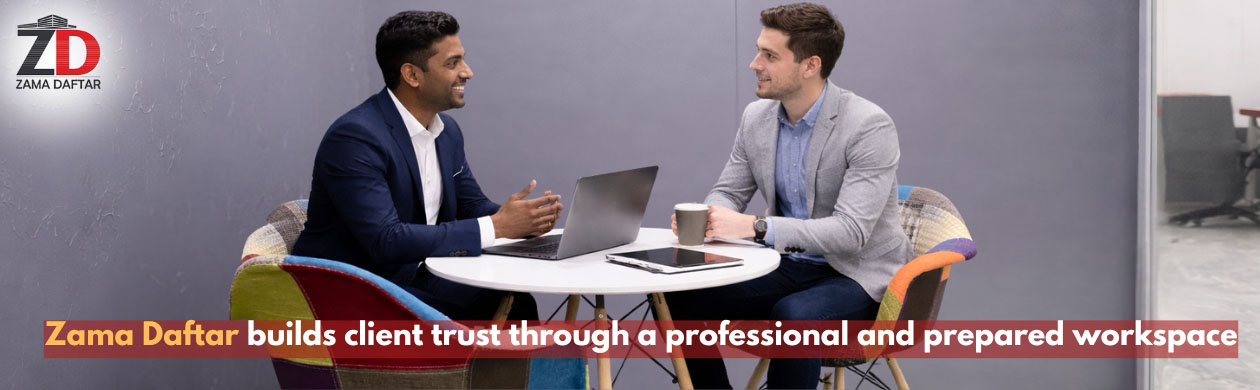
Trust rarely begins with a contract. Instead, it begins with a feeling. The moment a client steps into your workspace, something subtle happens. Quietly, they start observing.
They notice whether the space is organized. They register whether someone is there to receive them. They sense whether the environment feels stable. Long before a presentation begins, an impression has already formed.
Although many businesses refine proposals and pricing strategies, they often overlook the psychological power of physical space. In reality, understanding how a professional workspace builds trust with clients is less about decoration and more about perception. Ultimately, it is about confidence and credibility.
Coworking environments like Zama Daftar recognize this balance well. Rather than overcomplicating design, such spaces focus on structure, functionality, and professionalism. As a result, client relationships begin on stronger footing.
First Impressions Shape Confidence
At the start of any client meeting, energy is still forming. Expectations are naturally high. During these opening minutes, even small signals carry weight.
When a workspace feels prepared, clients tend to relax. Conversely, if the setting feels rushed or improvised, quiet doubt begins to surface.
Within a professional environment, clients often observe:
- A clean and organized reception area
- A meeting room arranged before arrival
- Staff who are aware of their name and appointment time
While these gestures may appear minor, they communicate readiness. And importantly, readiness builds trust faster than explanation ever could.
On the other hand, consider the opposite situation. Chairs are being adjusted as the client waits. The screen fails to connect. Someone interrupts accidentally. Although nothing dramatic occurs, confidence subtly decreases. Trust, after all, is highly sensitive to small disruptions.
The Environment Reflects Internal Systems
In most cases, people assume that what they see represents what they cannot see. Therefore, if the workspace feels structured, clients assume the operations are structured as well. Similarly, when the environment feels calm, leadership is perceived as calm.
Typically, a professional workspace includes:
- A clear meeting room layout
- Organized desks and shared areas
- Functional equipment without visible clutter
Because of this, clients subconsciously associate physical order with operational competence. Even though no one announces these conclusions aloud, they strongly influence decision-making.
| Workspace Element | What It Suggests | Emotional Reaction |
|---|---|---|
| Clean surfaces | Organized processes | Reassurance |
| Private rooms | Respect for confidentiality | Safety |
| Reliable technology | Preparation and competence | Confidence |
Privacy Encourages Honest Conversation
Beyond appearance, privacy plays a crucial role. Clients rarely share sensitive information in noisy or exposed environments. However, when discussions take place in private, structured settings, openness increases.
As conversations become more secure, clients feel comfortable discussing:
- Long-term growth strategies
- Budget limitations
- Operational challenges
- Strategic risks
Consequently, dialogue becomes deeper and more strategic. Over time, stronger conversations lead to stronger relationships.
Comfort Influences Decision Making
Equally important, comfort affects attention and clarity. Contrary to common belief, comfort is not about luxury. Rather, it is about ease and focus.
For example, uncomfortable seating shortens meetings. Poor lighting reduces concentration. Excessive noise interrupts flow.
Professional environments are therefore designed to support sustained engagement through:
- Ergonomic seating
- Balanced lighting
- Controlled noise levels
- Distraction-free surroundings
When physical discomfort is removed, participants remain engaged longer. In many cases, those additional minutes reshape the direction of a conversation.
Technology Reliability Protects Authority
Another critical factor is technology. Few things undermine authority faster than technical confusion. If a presentation fails to load or the internet disconnects repeatedly, attention shifts away from expertise and toward doubt.
For this reason, professional workspaces prioritize:
- Stable high-speed internet
- Integrated display systems
- On-site technical assistance
As a result, meetings flow smoothly. More importantly, credibility remains intact.
Consistency Builds Long-Term Trust

One successful meeting can spark interest. However, consistent positive experiences build loyalty. When clients visit the same professional environment repeatedly and encounter reliability each time, hesitation gradually disappears.
To illustrate, consider the difference between common meeting settings:
| Factor | Café | Home Office | Professional Workspace |
|---|---|---|---|
| Privacy | Low | Moderate | High |
| Noise Level | Unpredictable | Variable | Controlled |
| Professional Impression | Casual | Personal | Strong |
| Technical Support | None | Limited | Available |
Clearly, predictability reduces uncertainty. Over time, clients begin to expect reliability rather than question it.
Location and Accessibility Matter
Trust does not start at the meeting table. Instead, it often begins at arrival. If reaching the workspace feels confusing or stressful, frustration forms before any discussion takes place.
Professional workspaces frequently address this by offering:
- Accessible business locations
- Clear signage and directions
- Organized reception systems
Because of this, the interaction starts on positive ground.
The Strategic Advantage
Structured coworking environments allow businesses to project stability without long-term lease commitments. This flexibility is particularly valuable for startups, consultants, and growing teams.
Spaces such as Zama Daftar provide:
- Professional meeting rooms
- Managed facilities
- Reception services
- Flexible membership plans
Therefore, companies maintain agility while simultaneously presenting a strong and credible image.
Final Thoughts
Ultimately, trust develops quietly. It grows through repeated, consistent experiences rather than grand gestures.
A prepared meeting room signals respect.
A seamless presentation reinforces competence.
A private discussion builds confidence.
When environment and ambition align, perception strengthens naturally. In the end, how a professional workspace builds trust with clients comes down to experience. Clients may not remember every slide in a presentation, but they will remember how they felt.
If they felt respected, comfortable, and confident, they return. And more often than not, that feeling begins with the room itself.